
A hair topper base should cover the visible thinning area and attach to hair that can support it. Measuring only the bald or sparse patch can leave clips on fragile hair and make the edge visible. Measuring far beyond the needed area can add bulk and place the front or sides where they are harder to blend. A salon should mark the coverage boundary on the client's head, measure the base in both directions and make a physical template that captures the curve and parting position. The final size is a fitting decision, not a standard rectangle chosen from a product photo.
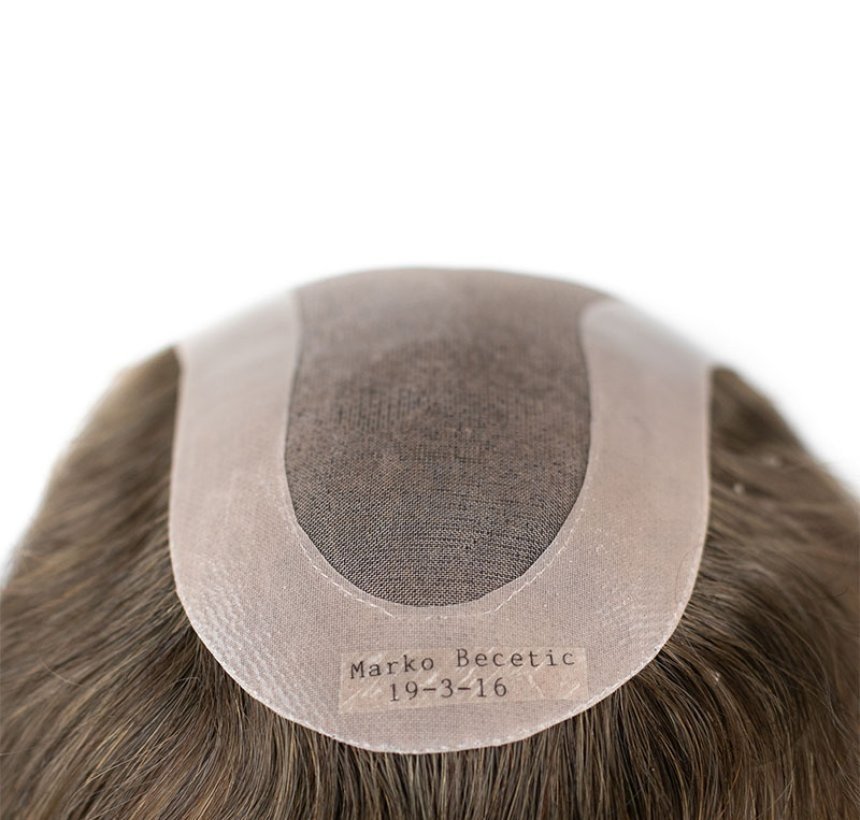
Start by examining the client with clean, dry hair in its usual parting. Mark the area where coverage is needed, then locate stable surrounding hair for attachment and blending. The topper edge should sit beyond the visibly thin region, but the margin should be no larger than necessary for secure placement and a smooth transition. Check the front because a low or thick edge may be apparent when the client looks down or pushes hair back.
Ask how the client wears their hair at work and at home. A topper that looks convincing under a center part may show its edge when swept to one side. Test the planned parting in several positions before drawing the final boundary. If the client uses clips, identify where each clip can grip without pulling on weak hair. If another attachment approach is planned, record that before choosing the base.
Coverage can change over time. Photograph the marked boundary and date the measurement so the next fitting can distinguish a changed scalp condition from a production error.
Measure front to back along the head's curve and side to side across the widest part of the marked area. Do not stretch a flat tape across the scalp and call that the base size; a curved surface can require a different outline. Record the front point, crown position and intended part line. If the thinning area is asymmetric, note the left and right distances separately rather than forcing a centered oval.
Create a lightweight template following the marked boundary. Label the front, back, left, right and parting direction. The template should lie flat against the scalp without folds or tension. Transfer the dimensions to the order sheet, but keep the physical template as the shape reference. Two pieces can share the same width and length yet fit differently because their front contour or side curve differs.
Compare the template with the chosen custom topper construction. A photograph of the base on a mannequin does not establish that its edge follows this client's hairline. Ask for a scale drawing or sample if the outline is unusual.
The mono topper example shows one way a base can combine a central material with an edge treatment. Other constructions use lace, skin or integration designs. The material influences where clips can be attached, how the edge lies against the scalp and how the parting appears. The best choice depends on the client's available anchor hair, sensitivity, styling method and desired coverage.
Mark attachment positions on the template. Place them in healthy surrounding hair, not at the weakest point of the thinning area. Check whether a clip sits over a seam or rigid edge and whether its closing pressure feels comfortable. For a pull-through or integration design, verify that enough natural hair can pass through the base without tension. A base that is dimensionally correct can still fail because its attachment plan is wrong.
Hair direction must match the planned parting and blend. A larger base may shift the parting point or cover hair that the stylist intended to leave visible. Review base size, material and hair direction as one specification, then document any compromise the client accepts.
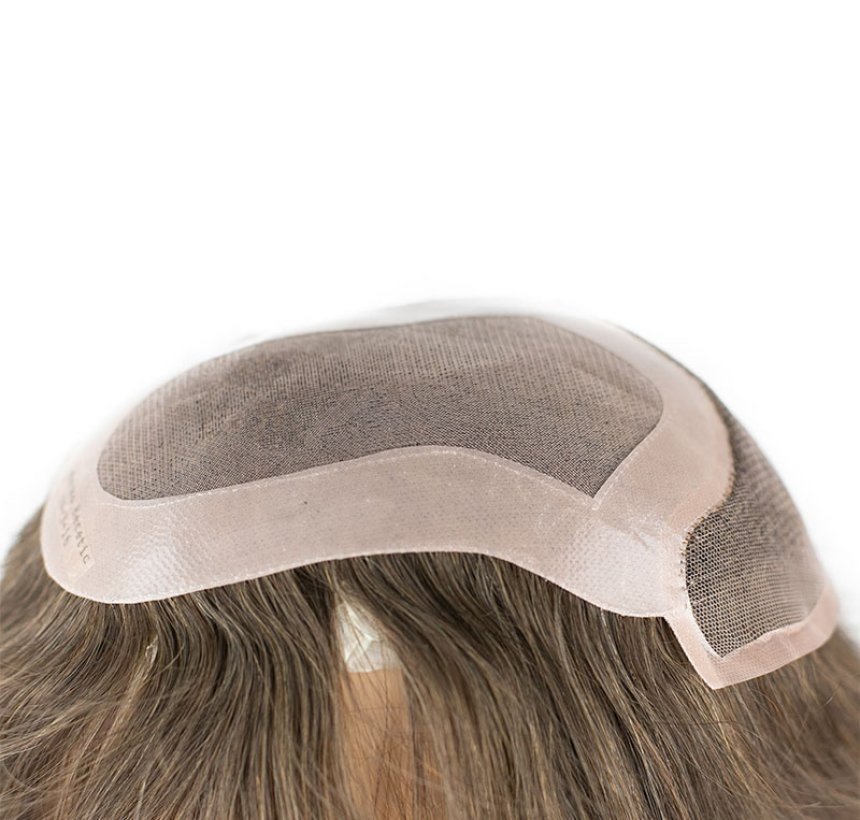
Place the template on the client and check it from the front, both sides and above. Ask the client to turn their head, look down and move hair into the planned style. The boundary should remain covered without an obvious ridge. If the template lifts at one side, revise the curve rather than increasing the overall dimensions automatically.
Check the planned attachment points during movement. A clip that feels secure in a still pose may pull when the client turns or brushes their hair. Note where the topper will meet the client's own hair and how the stylist will blend the lengths. Photograph the template in position with a ruler visible for scale. Record the measurements and the client-approved front point.
Review available topper options only after the fit target is clear. A stock size can be a useful starting point, but its listed dimensions do not replace a fitting. The trial record should make it possible to compare a delivered topper with the agreed outline before any cutting or styling begins.
Usually not. The base needs enough margin to hide the sparse boundary and permit secure attachment to suitable surrounding hair. The margin should be tested on the client rather than applied as a fixed number.
Some constructions allow limited adjustment, but cutting can remove attachment points or damage the edge. Agree on the outline before production and ask the maker which areas, if any, are safe to alter.
Length does not define the coverage footprint, but it changes how the topper blends and how much weight the base carries. Record hair length separately from base dimensions during the fitting.
Reassess the boundary and attachment hair at the next fitting. Compare dated photos and the old template with the current area. A repeat order should follow the current client, not automatically copy the prior base.
Send the labeled template, front-to-back and side-to-side measurements, dated fitting photographs and a note showing parting and attachment positions. Add hair color, length, texture and the desired blend with the client's own hair. State whether the product will be clipped, integrated or attached by another approved method.
We can compare the outline with a suitable base construction and identify measurements that need confirmation. send the fitting template with a photograph showing it on the client. Keep a copy in the salon record so the delivered piece can be checked against the approved shape before styling.
The quality of the products is the foundation of our existence!Customers'satisfaction is our permanent commitment!

Follow us on social media and find more about our hair procedures and for our latest news, photos and success stories.
TELEPHONE :+86-18765287179
WHATSAPP :+86-18765287179


© 2026 Qingdao Eminent Hair Products Co.,LTD. All Rights Reserved. Powered by HiCheng