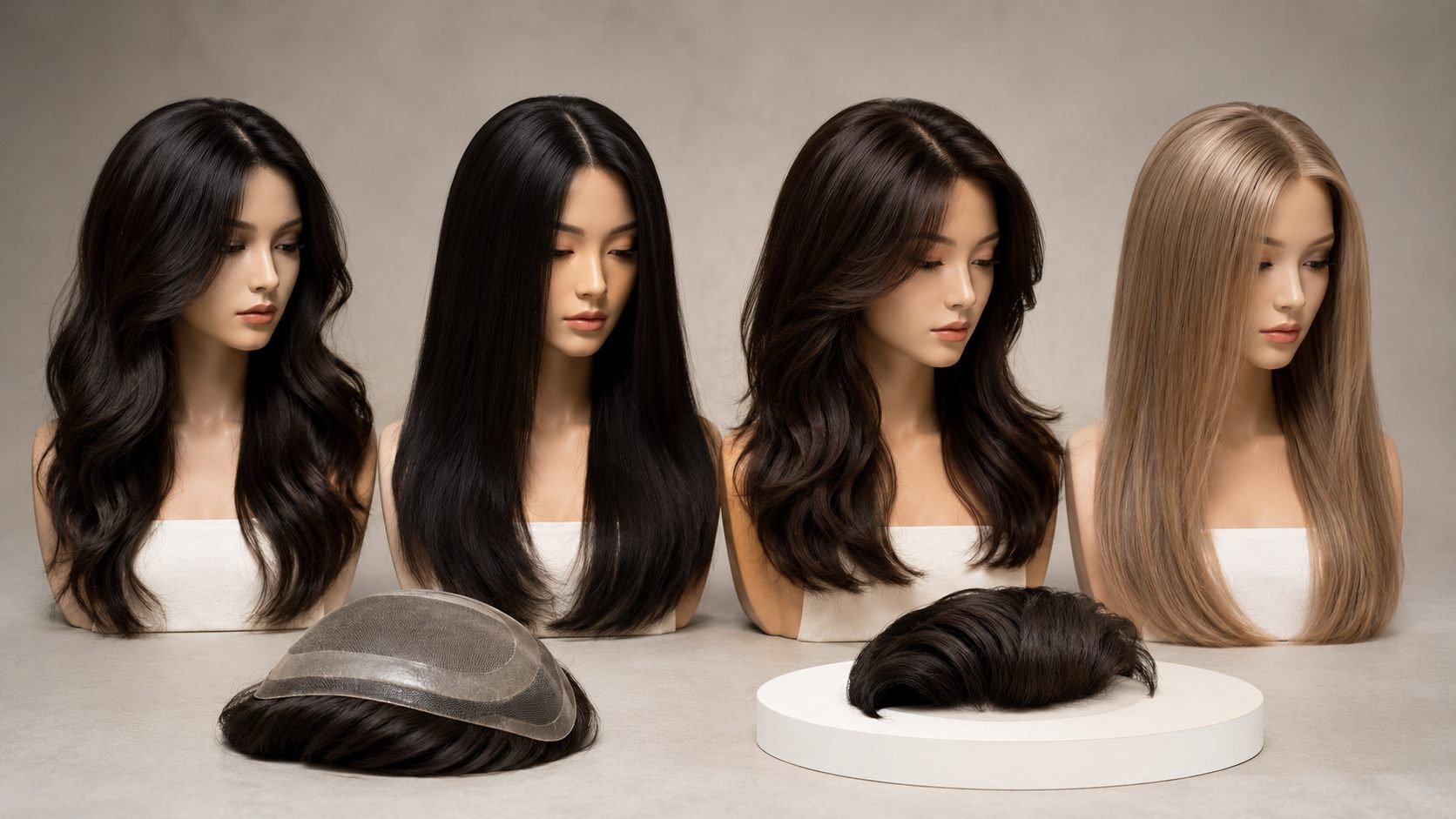
Choosing the best human hair for wigs or hair systems is not as simple as selecting a country of origin. Indian, Chinese, Mongolian, and European hair differ in strand thickness, movement, color, and response to processing. The right choice also depends on the wearer’s own hair, base, style, and routine.
Indian Remy hair offers a balanced mix of softness, strength, movement, and cost. Chinese hair is often chosen for fuller, straighter styles. Mongolian hair sits between fine and medium textures, while European hair is valued for its light feel and pale shades. These are starting points. Processing and cuticle condition may matter more than origin alone.
A natural-looking human hair wig must blend well, hold its style, and remain manageable after washing.
Key quality points include:
· Strand diameter and natural texture
· Cuticle alignment and processing history
· Density, length, curl, and gray percentage
· Compatibility with lace, mono, silk top, or PU skin
· Resistance to dryness, tangling, and heat
Remy hair has strands arranged in the same root-to-tip direction, reducing friction between cuticles. Virgin hair has not been dyed, permed, or chemically altered. A product may be Remy without being virgin. In “Remy vs virgin hair,” one term describes alignment and the other describes processing.
Indian hair is widely used in wigs, women’s toppers, and men’s hair replacement systems. It commonly has a fine-to-medium strand and a slight natural wave, supporting straight, waved, or lightly curled styles.
Indian Remy hair is practical for dark and medium-brown pieces. It offers strength for regular wear without appearing unusually thick. For men with fine or medium biological hair, Indian hair for hair systems can blend naturally around the sides and back. It works with fine mono, lace, and PU skin bases.
Heavy bleaching can weaken naturally dark strands, so buyers should ask how pale colors were produced. The original hair quality, cuticle alignment, and degree of chemical treatment often have more effect on durability than the country name printed on a specification sheet.
Chinese hair generally has a thicker strand and a straight pattern. It can give a wig or toupee a dense look without very high hair density, suiting short black styles, sleek bobs, and fuller men’s units.
The Chinese hair vs Indian hair decision often comes down to texture matching. Chinese hair can blend well with strong, straight biological hair, while Indian hair usually gives softer movement. The thicker fiber may be durable, but extensive lightening or texture alteration can cause dryness.
Collection, sorting, cuticle alignment, coloring, and factory control decide whether Chinese hair stays smooth. A dark, minimally processed Chinese hair wig may perform far better than hair that has been repeatedly bleached, recolored, and coated to create temporary softness.
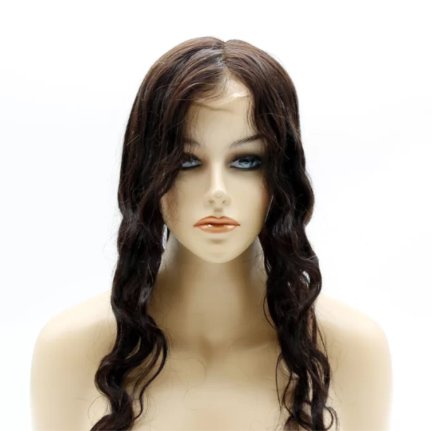
Mongolian hair is often fine to medium, with more body than very fine European hair. Mongolian hair wigs suit customers who want softness without a flat finish.
In a Mongolian hair vs Indian hair comparison, both work for natural waves and everyday styling. Mongolian hair may feel fuller, while Indian hair is often easier to source in varied specifications. A washed sample reveals more than a new sample coated with finishing products.
It suits layered wigs, medium-density toppers, and custom human hair wigs needing crown lift. It can also work well for shoulder-length styles that need movement without the heavy feel of a coarse strand. Because suppliers do not always use origin terms consistently, buyers should confirm the actual fiber thickness, Remy status, color treatment, and sample performance.
European hair is known for fine strands, low weight, and soft movement. It suits fine hair wigs and light-colored human hair wigs because lighter shades may need less aggressive bleaching.
The European hair vs Indian hair difference is most noticeable when matching very fine biological hair. European hair may blend more smoothly into soft side hair and create a delicate hairline. Indian hair often offers better value for medium textures and darker colors.
European hair is limited in supply and usually costs more. High heat and rough brushing can shorten the life of its fine strands. Paying a premium makes sense when the wearer needs a close match for naturally fine hair, soft density, or blonde and light-brown shades. For a dark, medium-textured everyday wig, the price difference may offer little practical benefit.
Every batch is different, but these typical traits provide a useful buying framework.
Hair type | Typical feel | Best use | Main point to check |
Indian | Fine to medium, soft | Everyday wigs and systems | Degree of lightening |
Chinese | Medium to thick, firm | Dark, dense, straight styles | Chemical processing |
Mongolian | Fine to medium, soft with body | Layered wigs and toppers | Batch consistency |
European | Fine, light, silky | Fine textures and pale shades | Price and durability |
The best human hair for wigs matches the wearer, not the highest price. Women’s wigs need movement through longer lengths, while men’s systems must blend with short side and back hair.
Indian Remy hair is reliable for full wigs, lace front human hair wigs, and silk top human hair wigs. Mongolian hair adds crown body. European hair suits fine, light styles, while Chinese hair supports sleek, dark looks.
The base matters too. Lace offers airflow, a silk top creates a scalp-like part, and integration toppers expose biological hair. Premium hair cannot correct the wrong coverage or base.
Consider a woman with fine hair and widening crown loss. A heavy, high-density Chinese hair wig may overpower her natural side hair, while a fine European or Indian hair topper may blend more closely. A customer seeking a dense, straight black bob may have the opposite result.
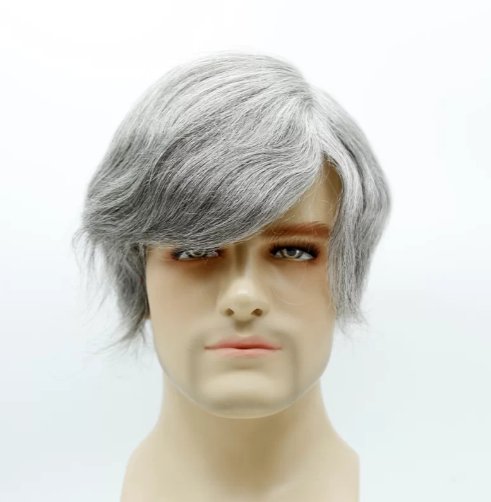
For most men, the best hair for hair systems is a fine or medium strand matching the remaining hair. Indian hair works with lace, mono, and thin skin. Chinese hair may suit coarse, straight sides; European hair can match very fine or light hair.
A natural hairline toupee also depends on density and ventilation. Too much front density looks artificial. Short styles benefit from a graduated hairline and accurate color samples.
For example, a wearer with 30% gray at the temples may need a lower gray percentage through the top and a gradual blend near the sides. Ordering one flat color across the entire hair system can make even high-quality hair look unnatural.
A salon, wholesaler, or individual buyer should send more than a color number. Good specifications reduce remakes and improve repeat orders.
Provide:
· A base template or exact length and width
· Side and back hair samples when available
· Target density, length, wave, and gray percentage
· Preferred lace, mono, silk top, or skin base
· Wearing climate, activity level, and attachment method
Stock pieces suit common sizes and colors. Custom work is better when head shape, color blend, gray pattern, curl, or coverage falls outside standard specifications.
Climate should also guide the base choice. A breathable lace base may feel more comfortable for active wearers in hot conditions. Thin PU skin can provide a close scalp appearance and straightforward tape or adhesive attachment, but it generally offers less airflow. Mono bases are often selected when durability and stable construction are priorities.
Qingdao Eminent Hair Products Co., Ltd. is a China-based wig supplier and manufacturer serving men’s and women’s alternative-hair markets. Its range includes stock and custom toupees, full wigs, toppers, frontals, extensions, repairs, and copy services.
Indian, Chinese, Mongolian, and European hair are available in Remy and virgin options, with varied lengths, colors, bases, knotting methods, and gray blends. The company lists around 50 factory workers and about 500 knotting workers, accepts one-piece trial orders, and keeps templates and hair samples for repeat production.
For buyers comparing lace, fine mono, V-loop skin, women’s toppers, or custom full wigs, direct communication helps settle specifications. Color rings, curl rings, gray-percentage rings, photos, and samples reduce order differences. This is particularly useful for salons and wholesalers that need consistent replacements across repeat orders rather than a single standard piece.
Indian hair is the best all-round option for many wigs and hair systems because it balances softness, movement, availability, and cost. Chinese hair suits fuller, straighter styles. Mongolian hair offers softness with body. European hair is a strong match for fine textures and light shades.
Origin is only one part of the decision. Cuticle alignment, processing, base design, density, color matching, and skilled knotting directly affect appearance and wear. A detailed specification and tested sample are more useful than a broad label.
Indian Remy hair is often the best general-purpose choice. European hair may be better for very fine or pale wigs, Chinese hair for thick straight styles, and Mongolian hair for soft volume.
Fine-to-medium Indian hair suits many men’s systems, but the correct choice depends on the side and back hair. Texture, color, gray percentage, density, and base type should be matched together.
Not in every case. European hair is finer and well suited to light shades. Indian hair is more available, versatile, and often more practical for medium textures and regular wear.
It often stays more manageable because the cuticles run in one direction. Wear time still depends on processing, care, base durability, heat, and frequency of use.
Yes. Mongolian hair wigs can provide a soft feel with natural body. Ask for a washed sample and confirm whether the hair is Remy, virgin, colored, or chemically processed before a larger order.
The quality of the products is the foundation of our existence!Customers'satisfaction is our permanent commitment!

Follow us on social media and find more about our hair procedures and for our latest news, photos and success stories.
TELEPHONE :+86-18765287179
WHATSAPP :+86-18765287179


© 2026 Qingdao Eminent Hair Products Co.,LTD. All Rights Reserved. Powered by HiCheng