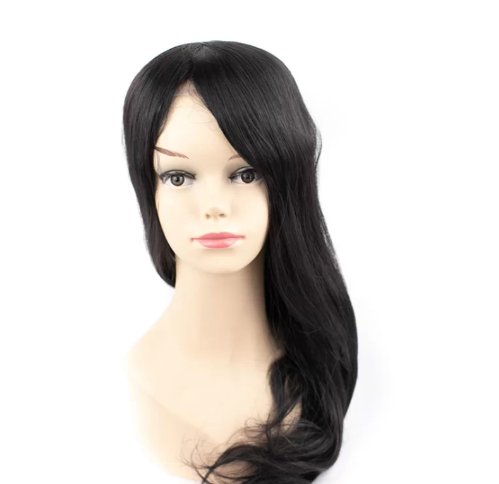
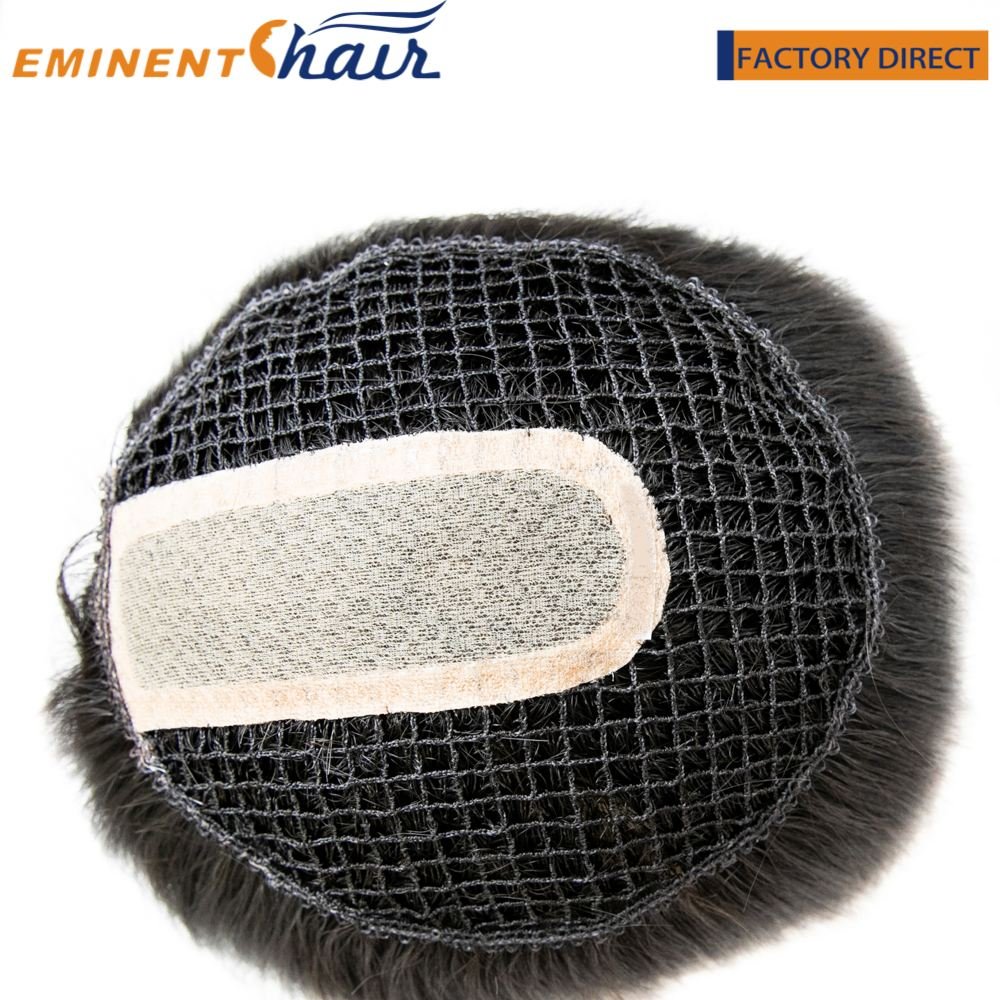
An integration hair topper uses an open fishnet base that allows the wearer’s own hair to be pulled through selected openings. The natural hair and added hair are then blended into one style. This design suits people with diffuse thinning who still have enough healthy hair across the top to pass through the net.
It is not the right answer for every thinning pattern. Large bare areas, fragile hair, active scalp irritation, or hair that cannot safely carry handling may call for a closed-base topper or another hair replacement design. A useful consultation checks the scalp, remaining hair, coverage area, attachment plan, and maintenance routine before choosing the base.
Integration toppers suit wearers with thinning spread across the top but enough natural hair inside the coverage area to pull through a fishnet base. They work best when the remaining hair is reasonably strong, the openings align with that hair, and the wearer can manage regular pull-through, washing, and repositioning without excessive tension.
Candidate factor | Good sign | Reason to reconsider |
Thinning pattern | Diffuse thinning with hair across the top | Large smooth bald area |
Hair condition | Strong enough for gentle pull-through | Fragile, breaking, or very short hair |
Styling goal | Natural hair mixed with added volume | Full concealment without pull-through |
Maintenance | Comfortable with sectioning and blending | Needs the fastest possible daily routine |
Scalp condition | Calm scalp with no active irritation | Tenderness, sores, or inflamed areas |
The base is built from an open net rather than a fully closed surface. During fitting, small sections of the wearer’s hair are drawn through the openings with a loop tool or tail comb. The topper hair sits around those sections. Once combed together, natural roots remain visible in many areas and help break up the edge between biological hair and added hair.
The construction can be seen within the broader women’s topper collection, where base shape and coverage should be compared as closely as hair length and color.
Fishnet opening size affects how much natural hair can pass through and how much coverage the added hair supplies. Larger openings make pull-through easier but reveal more of the wearer’s scalp and hair. Smaller openings create a finer grid and more support, though sectioning takes longer. Many designs use a reinforced border for shape and attachment.
The front also deserves separate planning. An integration grid may begin behind the natural hairline, use a finer front section, or include a different material where the wearer needs more concealment. A base drawing should mark the hairline, parting zone, thinning area, and any closed panels.
Who benefits most from an integration topper?
The best candidate has hair across the area covered by the net, but not enough density for the desired fullness. Common situations include a widening part, general top thinning, or reduced crown volume where strands still remain throughout the zone. The design can preserve the look of natural roots and allow color variations in the wearer’s own hair to remain visible.
· The remaining top hair can be divided into small, clean sections.
· The strands tolerate gentle pulling without snapping or causing pain.
· The client wants added volume while keeping visible natural roots.
· The coverage area and net openings can be mapped before production.
A wide bald patch gives the net little hair to integrate, so open holes may expose the scalp without enough natural strands to soften the view. Very fine or damaged hair may also struggle with repeated pull-through. If the wearer has scalp tenderness, active inflammation, or unexplained sudden hair loss, fitting should wait until an appropriate professional has assessed the condition.
Pull-through should feel secure, not tight. Drawing sections too firmly can create soreness and place avoidable stress on the wearer’s hair. During a trial fit, check the front, crown, and sides after several minutes. Redness, pinching, headaches, or a strong tug when turning the head means the section size or attachment plan needs to change.
A closed base covers the scalp and thinning area with lace, monofilament, silk, skin, or a combination. It does not need natural hair to pass through the center. That makes it useful when the top has very little hair or when the client wants quicker placement. An integration base depends on remaining hair but can create a distinctive mixed-root effect.
Feature | Integration topper | Closed-base topper |
Natural hair through base | Yes, through open net | Usually no |
Best thinning pattern | Diffuse thinning with remaining hair | Sparse or bare coverage zones |
Fitting time | More sectioning and pull-through | Often faster placement |
Root appearance | Natural roots remain visible | Scalp effect comes from base |
Maintenance need | Hair must be separated and blended | Base and attachment need routine care |
Begin with clean, dry, detangled hair. Place the topper in the approved position without stretching the base. Starting at one side, draw small sections through the net in a consistent pattern. Skip irritated areas and avoid oversized sections that distort the grid. After pull-through, blend the natural and added hair before securing the perimeter as designed.
· Mark the front position and center line before sectioning.
· Use a smooth loop tool and keep it away from the scalp.
· Pull only enough hair through each opening to blend and support the style.
· Check symmetry and comfort before cutting or applying styling product.
Color, density, and length need a blended plan
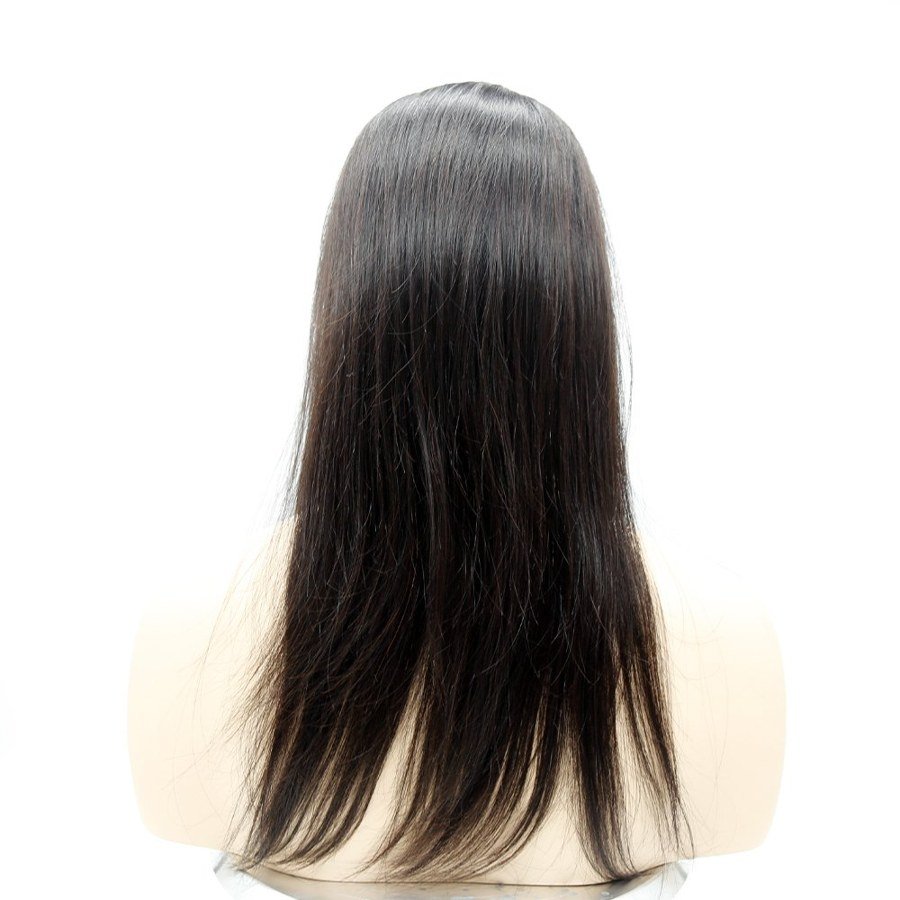
Because the wearer’s hair stays visible, color matching must account for roots, mid-lengths, gray strands, and any highlights. Density should add volume without burying the natural hair under a solid layer. Length must allow the two hair sources to be cut into one shape. Daylight photos from the top, sides, and back are more useful than one indoor front photo.
Curl and strand diameter matter too. Straight fine natural hair can separate from a thick wavy topper even when the color is close. Send a small hair sample when possible, or provide close photos against a neutral card. A stylist can refine the cut, but production specifications should already be close.
Detangle the ends first and support the base while brushing. Do not drag a brush across the net or pull hard where natural hair passes through. Washing instructions depend on whether the topper is removed or worn for longer periods. In either case, keep residue from collecting around the openings and dry the roots and base thoroughly.
The fitting pattern may need adjustment as thinning progresses or hair grows. Sections that once filled an opening can become too small, while new growth can make the grid feel tight. Regular checks help prevent the net from rubbing one area or pulling the same strands repeatedly.
Send five daylight views, base dimensions, a marked thinning map, the natural hairline position, fishnet opening preference, any closed panels, perimeter attachment, density by zone, color and gray percentage, strand diameter, curl, and finished length. State whether the piece will be removed daily or fitted for longer wear.
For an individual base layout, review custom women’s hair replacements and attach a drawing showing open-net and closed coverage zones.
Qingdao Eminent Hair Products Co., LTD is a Qingdao-based wig and hair replacement supplier. Company materials describe about 50 factory workers and roughly 500 knotting workers. Its hair manufacturing team works with varied base designs, knotting methods, hair origins, colors, lengths, and custom requirements. For an integration topper, a clear thinning map, opening plan, density map, and reference sample give production and QC teams a measurable target.
An integration hair topper works by bringing natural hair through an open fishnet base and blending it with added hair. It is best for diffuse thinning when enough healthy hair remains across the top. The result depends on opening size, base shape, tension, color, density, and maintenance. A trial fit and a detailed custom drawing help confirm that the wearer’s hair can support the design comfortably.
These questions cover the main suitability and fitting concerns before ordering.
It is a topper with an open fishnet base. Sections of the wearer’s natural hair pass through the openings and blend with the added hair.
It may cover small sparse zones, but a large bare area can remain visible through the open net. A closed or combination base may provide better coverage.
It should not be tight or painful. Oversized sections, repeated tension, rough tools, or a poor fit can stress fragile hair, so comfort must be checked during fitting.
The timing depends on hair growth, thinning changes, attachment, and wear routine. Check the fit whenever the net feels tighter, sections shift, or blending becomes difficult.
Provide base length and width, coverage outline, hairline position, thinning map, open and closed zones, opening size, attachment points, density, color, curl, and length.
When the specification is ready, send the integration topper requirements with photos and a marked base drawing.
The quality of the products is the foundation of our existence!Customers'satisfaction is our permanent commitment!

Follow us on social media and find more about our hair procedures and for our latest news, photos and success stories.
TELEPHONE :+86-18765287179
WHATSAPP :+86-18765287179


© 2026 Qingdao Eminent Hair Products Co.,LTD. All Rights Reserved. Powered by HiCheng