
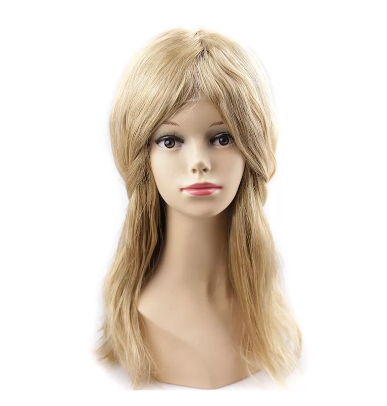
A bad supplier rarely looks bad at the start. The first quote comes fast. The sample photos look clean. The price seems hard to refuse. Problems show up later, usually when money is already tied up in stock and customer complaints start to land.
For salons, distributors, clinics, and online sellers, the bigger risk is not just low quality. It is unstable quality. One batch feels soft and natural. The next batch tangles early, sheds more than expected, or arrives with a different density, base feel, or hairline finish. That kind of gap hurts repeat sales much faster than a high unit cost ever will.
The first job in sourcing is not finding the cheapest factory. It is finding a wholesale wig supplier that can repeat the same result, communicate clearly, and fix problems without turning every order into a negotiation.
A poor supplier can damage a business in three ways at once. The first is rework cost. When a 30-piece order needs sorting, trimming, or remake requests, the original “cheap” quote stops being cheap. The second is time loss. If a shop promised a customer delivery in ten days and the supplier slips by two weeks, the store carries the blame. The third is trust loss. Buyers remember inconsistency more than they remember a one-time low price.
In hair replacement and wigs, that risk gets even higher because customers notice small differences. A lace edge that feels rough, a topper that does not sit flat, or a men’s unit with a less natural front can change how the entire product is judged.
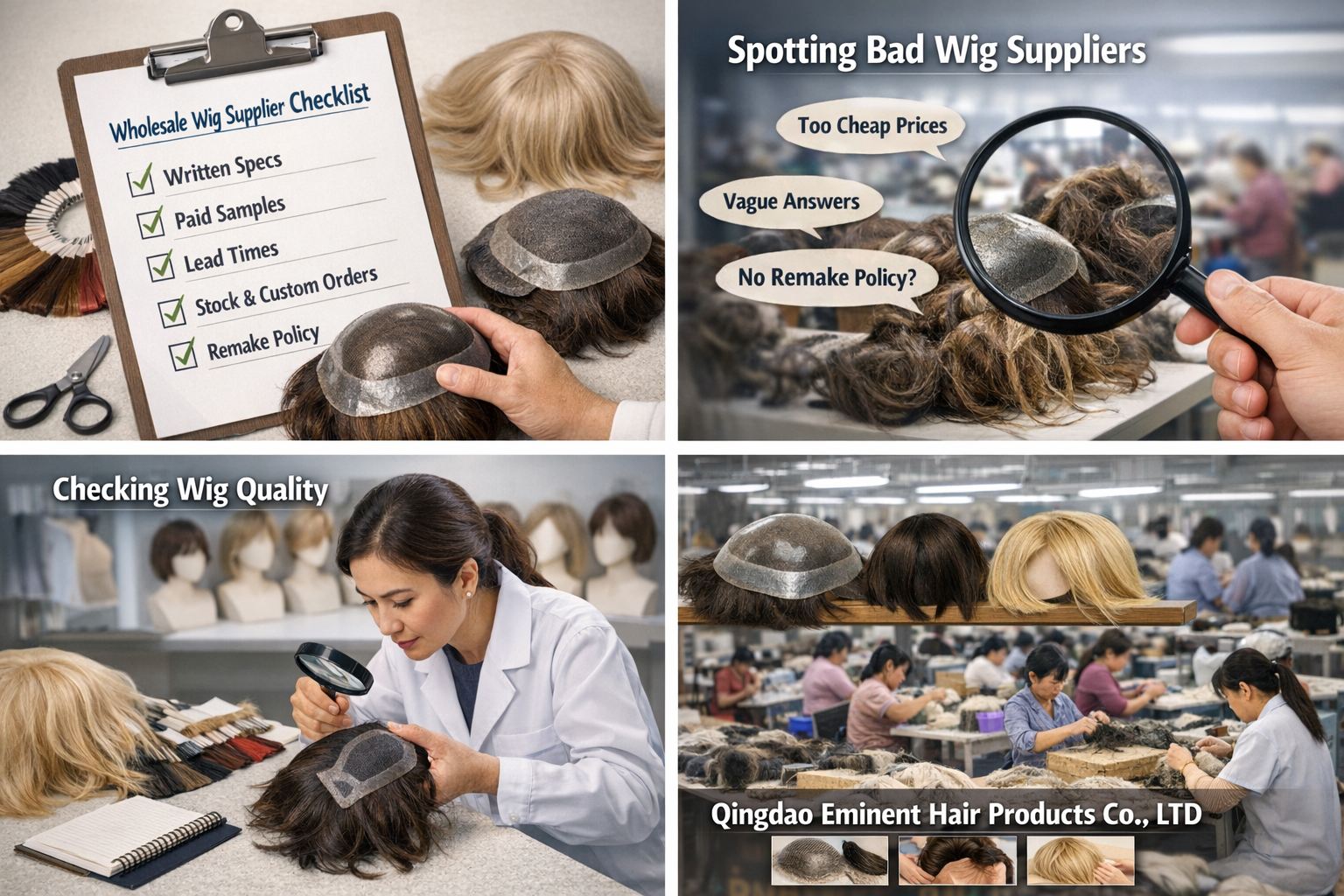
A reliable supplier should be judged like a long-term production partner, not like a one-time listing on a marketplace. The checklist below helps buyers compare suppliers before moving from a trial order to regular purchasing.
A serious human hair wig manufacturer should be able to give clear written details for what is being quoted. That includes hair type, processing level, density range, cap or base structure, available sizes, color options, and whether the order is stock, semi-custom, or fully custom.
If the conversation stays vague, bulk production usually turns vague too. “Natural look,” “good quality,” and “premium hair” are not working specs. A good supplier can put details in writing and keep them stable from one order to the next.
One free sample proves very little. A better test is a small paid order across more than one piece, especially if the plan is to sell different categories such as men’s hair systems, women’s wigs, or toppers. That makes it easier to check whether the supplier can keep the same feel, finish, and workmanship across units.
A practical test order might include one stock item, one custom piece, and one item from a different category. That tells more than a single hero sample ever can. It also shows whether the supplier handles mixed orders smoothly, which matters for buyers building a wider product line.
Some factories are strong only in stock orders. Others do custom work well but move slowly on replenishment. A buyer should know which type of supplier is being evaluated.
This matters in real sales situations. A salon that needs fast replacement pieces cannot depend on a supplier with no stable stock support. An online store that wants to build a more distinct catalog may need a stock and custom wig supplier that can handle repeat basics while also supporting tailored orders.
Lead time should be broken into sample time, production time, and shipping time. Many sourcing mistakes happen because those three are mixed into one answer.
If a supplier says “fast delivery,” the next question should be simple: fast from where, for what order type, and under what quantity? A supplier that gives real timelines for stock, rush, and standard production is usually easier to work with than one that only gives broad promises.
After-sales support is part of quality, not a separate topic. Buyers should ask what happens if the bulk order arrives with defects, if color differs too much from the approved sample, or if the unit construction is wrong.
The answers reveal a lot. A strong supplier will explain remake terms, repair terms, response time, and what proof is needed. A weak one will stay abstract until a problem arrives.
Checkpoint | Strong signal | Red flag |
Product specs | Clear written details on hair, base, density, size, color, and order type | Only sends photos and general promises |
Sampling | Offers paid sample process and accepts revision feedback | Pushes bulk order before proper testing |
Lead time | Separates sample, production, and shipping timelines | Uses vague phrases like “very fast” |
Communication | Replies clearly, answers technical questions, keeps records | Slow replies, partial answers, changes story |
Quality handling | States remake, repair, or defect policy in advance | Avoids responsibility until after payment |
Repeat orders | Can copy past orders and keep buyer files | Treats every reorder like a fresh start |
Many risky suppliers reveal themselves before the first invoice is paid. The signs are often small, but they show up fast when the conversation gets specific.
A low price is not a problem by itself. A low price with no explanation is. If one quote lands far below the rest, buyers should ask what changed. Was the hair source different? Was the cap construction simplified? Was density reduced? Was the item heavily processed to hit the number?
Price only becomes useful when compared against specs. Without that, the buyer is not comparing like for like.
Some suppliers have polished product images but struggle with basic production questions. Ask whether the supplier can handle repeat color matching, mixed quantities, private labeling, packaging details, or remake terms. If the answers stay soft, the risk is higher than the gallery suggests.
This matters for a toupee supplier in particular, because repeatability is often the whole business. A buyer may need the same base feel and same appearance again for a loyal customer six months later. That requires records, not memory.
A supplier that keeps templates, samples, order records, and past specs can usually support repeat business better. Without a file system, every reorder becomes slower and more uncertain. That may be manageable for fashion wigs sold once. It is a serious weakness for ongoing replacement orders.
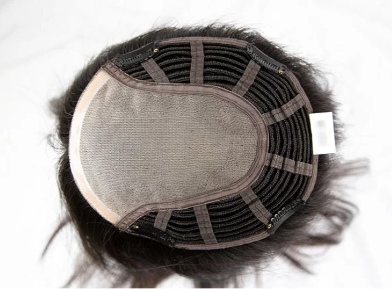
Not every buyer needs the same kind of supplier. The right choice depends on how the products will be sold.
A salon often needs a wholesale wig supplier that can balance stable stock with case-by-case customization. Fast remake handling matters because the end client is already in the chair, already waiting, or already booked for a fitting. Clear communication is worth more here than a small saving on unit cost.
Online sellers need consistency across photos, listing details, and actual delivered units. That means a human hair wig manufacturer with stable specs, repeatable finishes, and enough product coverage to support content planning, seasonal launches, and restocking.
Distributors usually benefit from a supplier that can cover men’s systems, women’s wigs, and hair toppers under one roof. That reduces supplier sprawl and makes quality management easier. A reliable hair topper supplier is especially useful for stores serving women who need lighter coverage options rather than full-cap wigs.
For buyers looking at Qingdao Eminent Hair Products Co., LTD as a possible wig supplier, the company presents itself as a Qingdao-based professional manufacturer focused on men’s toupees, women’s wigs, toppers, and related hair replacement products. Its website states that it has around 50 factory workers and around 500 knotting workers, offers both stock and custom orders, provides repair support, and has a copy system for buyers who want an existing piece replicated. The public FAQ and contact pages also state a one-piece MOQ for quality testing, normal custom lead times of about 6–7 weeks, rush timing of about 3–4 weeks, stock shipment within 3 days after payment, a free repair or remake promise for manufacturer defects reported within 2 months, and a reply window of within 12 hours for inquiries.
Choosing a wholesale wig supplier is less about finding a perfect sales pitch and more about testing whether the supplier can stay consistent under normal business pressure. That means written specs, multi-piece samples, real lead times, repeat-order records, and a clear fix process when something goes wrong. Buyers who check those points early usually avoid the most expensive sourcing mistakes later.
Start with written specs, then place a small paid sample order instead of jumping straight to bulk. A good wholesale wig supplier should also explain lead time, remake terms, and repeat-order handling in clear language.
The biggest red flag is vague communication. If a wig supplier cannot answer direct questions about hair type, construction, sample process, and defect handling, quality problems usually show up later.
A toupee supplier should be asked about base options, repeat-order file keeping, sample approval, lead times, and what happens if the front appearance or fit does not match the approved standard.
A hair topper supplier often needs to be more precise about base size, coverage area, density, and blending. For stores serving women with partial hair loss or volume concerns, those details matter just as much as the hair itself.
The quality of the products is the foundation of our existence!Customers'satisfaction is our permanent commitment!

Follow us on social media and find more about our hair procedures and for our latest news, photos and success stories.
TELEPHONE :+86-18765287179
WHATSAPP :+86-18765287179


© 2026 Qingdao Eminent Hair Products Co.,LTD. All Rights Reserved. Powered by HiCheng