Hair topper parting options affect far more than the line visible on top. They shape how the front sits, where coverage begins, how much scalp effect shows, and whether the hair can move to a new side later. A free part hair topper offers styling choice only inside its hand-tied area. A center part hair topper gives a set, tidy line. A multi-directional hair topper allows broader movement, provided the base construction and ventilation pattern support it. The right choice follows the wearer’s usual part, thinning pattern, and styling routine—not a label alone.
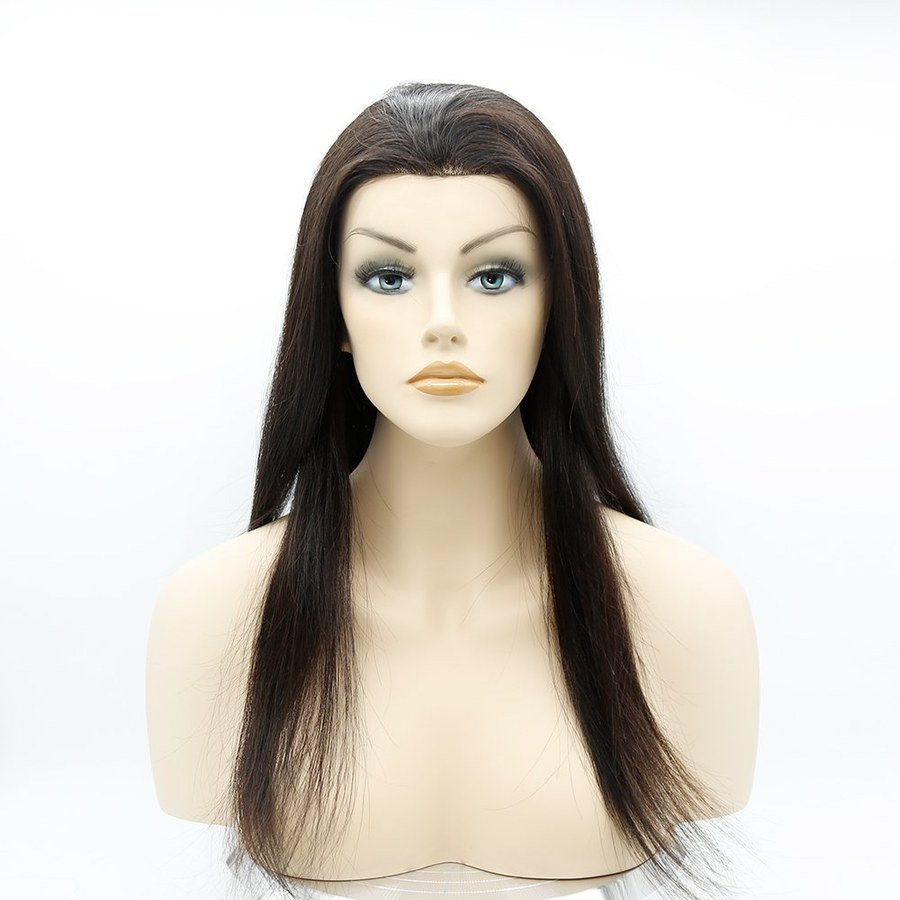
Choose a center part for a stable, symmetrical look and quick morning styling. Choose a free part when the part may shift left, right, or slightly off-center inside a defined zone. Choose a multi-directional design when the wearer changes direction often, brushes hair back, or needs flexible coverage across a wider top area. In every case, ask where the hair is hand tied and how large that usable parting zone is.
Parting design | Best fit | Main strength |
Center part | A wearer who keeps one middle line | Consistent placement and clean balance |
Free part | A wearer who moves the line within a set zone | Left, right, or off-center styling |
Multi-directional | Frequent restyling or brush-back looks | Hair movement across a broader area |
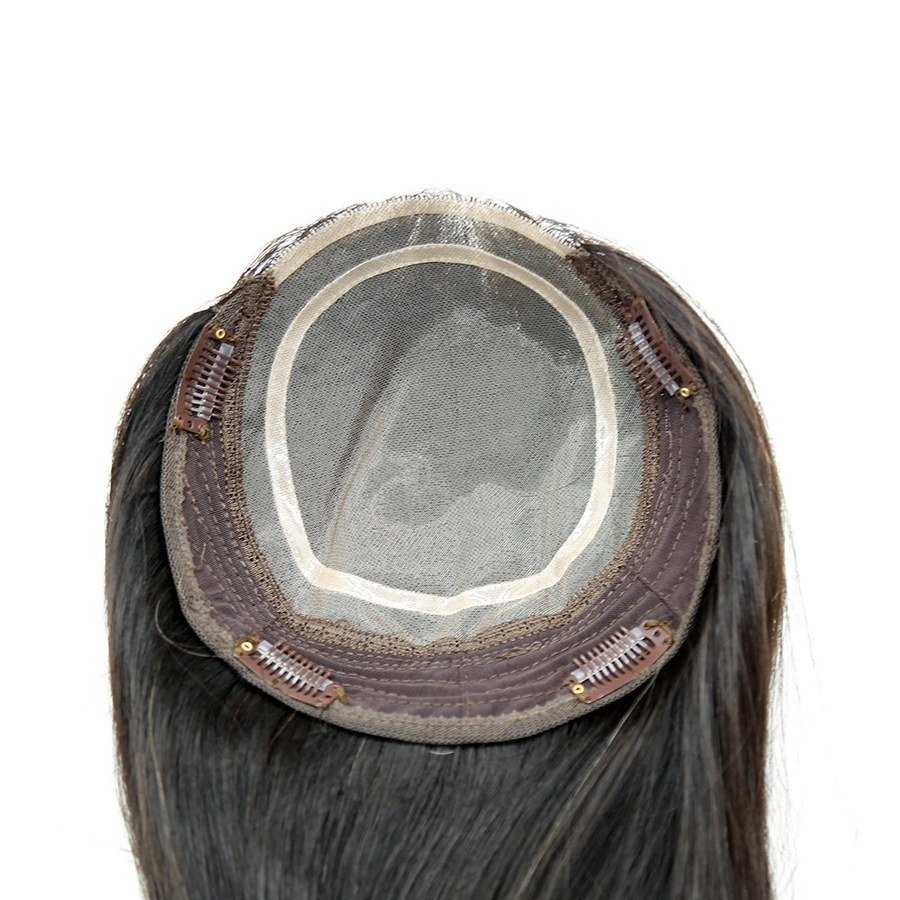
A free part topper does not mean every point on the base can form a convincing part. Hair can usually be redirected within the monofilament, lace, or silk section where strands are individually knotted or injected. Machine-made wefts, reinforced edges, clips, and perimeter material may sit outside that area. Buyers reviewing a women’s topper collection should compare base drawings as closely as hair length or color.
The useful question is not simply, “Is it free part?” Ask for the parting area dimensions from front to back and side to side. Then mark the wearer’s preferred line on a daylight photo. This prevents a common mismatch: the topper is sold as free part, yet a deep side part lands on a fabric strip and exposes the base.
A movable part works best when the new line remains inside the hand-tied zone and follows the natural fall of the ventilation. Dampening the roots, placing the line with a tail comb, and using low heat can reset human hair topper parting. Heavy heat near the base, forceful backcombing, or pulling against fixed knot direction can shorten wear and create lift at the edge.
A fixed center part suits someone who wears the same middle line every day, wants even volume on both sides, or needs predictable placement after washing. The factory can set density and knot direction around that line, which often means less styling.
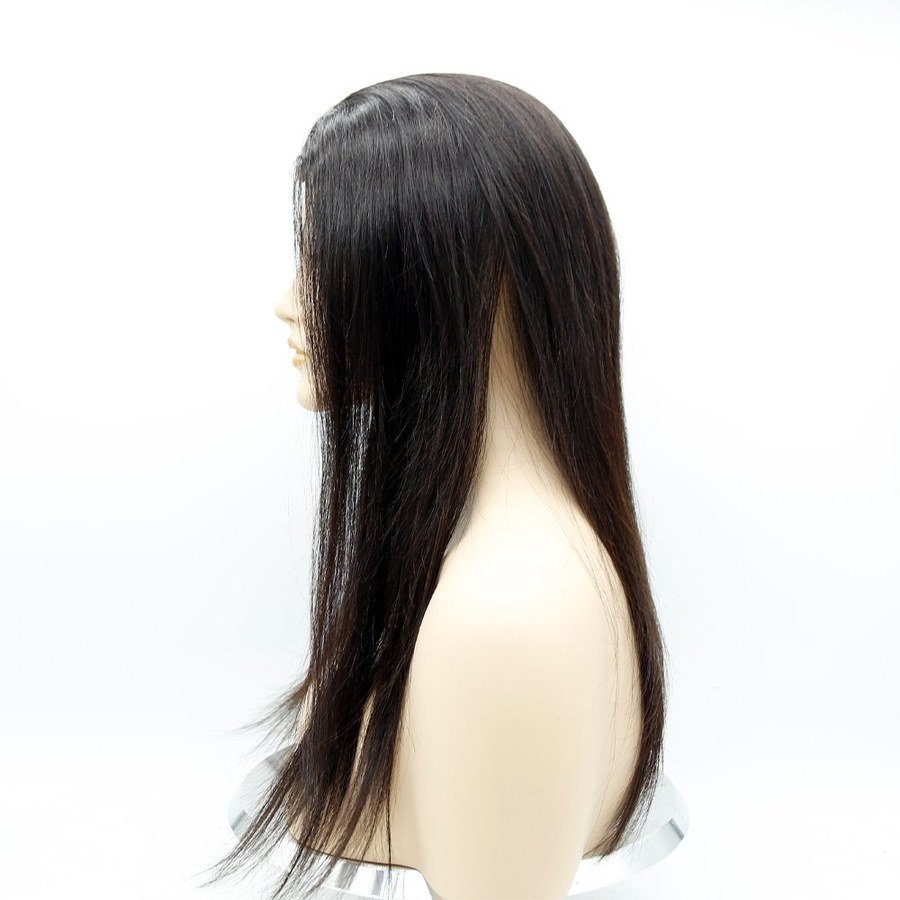
The part should meet the wearer’s own line at the front without creating a second visible track. Check the first inch behind the hairline in daylight. If the topper begins too far back, sparse native hair may remain exposed. If it sits too far forward, the density can look abrupt. A center part topper should also match scalp tone, strand direction, and the amount of skin normally visible along the line.
Multi-directional hair topper designs use a broad hand-tied area and a ventilation pattern that lets strands travel in more than one direction. Hair may be worn with a left, right, middle, or soft zigzag part. That flexibility helps a wearer who changes style often or has thinning beyond one narrow line.
The base will not disappear under every style. A hard diagonal part may reach a reinforced panel, while a brush-back look can reveal an edge designed to sit under hair. Send the intended parting positions and ask which area creates the scalp effect.
Two toppers can both carry the phrase “free part” yet behave differently because their hand-tied zones, knot types, edge materials, and density vary. Compare topper base types before choosing a parting design.
Fine monofilament forms a stable mesh where individual strands can be knotted, supporting scalp effect and movement in a hand-tied hair topper. Stronger mono may feel firmer than fine lace; very fine material needs gentler handling. A mono top topper can still be free part or fixed part.
A silk top hides knots beneath a smooth upper layer, which can make a straight part look clean. Its layered construction is usually thicker than lace, so check the front transition and edge height. Flexible silk top topper parting still stops at the prepared silk area.
Lace is light and can lie close to the scalp, though fine lace asks for careful attachment and removal. Lace topper parting depends on the size and knot direction of the hand-tied panel; the material alone does not guarantee a multi-directional hairpiece.
The most natural hair topper parting begins with the area that needs coverage. A narrow widening part calls for a different base than diffuse thinning across the crown. Before selecting a custom hair topper parting, collect clear evidence rather than relying on a general description.
Take front, top, crown, left, and right photos in indirect daylight, with no beauty filter.
Measure the thinning area front to back and side to side, then add the attachment margin recommended by the supplier.
Mark the everyday part and any backup part on the top photo; note whether hair is brushed forward, sideways, or back.
Record density at the front separately from density at the crown so the topper blends without a sudden shelf of hair.
State whether the priority is daily consistency, a realistic scalp part, or flexible hair topper styling.
For unusual coverage shapes, custom women’s hair replacements allow the base outline, hair direction, density, and parting zone to be discussed together rather than treated as separate choices.
Often, yes—if the new line stays inside a free-part or multi-directional section. Do not force a fixed part topper into a deep new line. For human hair, use a calm reset process:
Place the clean, detangled topper on a secure stand and identify the usable hand-tied zone.
Lightly dampen the root area. Draw the new line with a tail comb without scraping the base.
Comb each side in its new direction. Use low heat at a safe distance while holding the hair in place.
Let the base cool and dry fully before attachment. If the edge lifts or fabric appears, move the line inward.
If a side part springs back after washing, the better answer is a different ventilation pattern—not more heat or styling product.
Clear specifications help a hair replacement supplier quote the right construction. Send base measurements, a top-view sketch, five daylight photos, preferred and alternate part positions, hair direction, density by zone, scalp color, curl pattern, length, and attachment method. State whether the order needs a fixed center part, a free parting area, or multi-directional ventilation.
Ask the factory to confirm the usable parting-zone dimensions on the drawing before production. Photos of the finished top and underside can also verify knot direction and edge placement. When those details are ready, send the parting specifications with the inquiry so the discussion begins with measurable requirements.
Qingdao Eminent Hair Products Co., LTD is a Qingdao-based wig supplier and hair manufacturer serving wholesale, salon, and private-label needs. Company materials describe a production team of about 50 factory workers supported by roughly 500 knotting workers. The hair-product manufacturing team works with different base materials, knotting methods, hair origins, colors, lengths, and custom base designs. For a topper project, that production scope is most useful when the buyer supplies a precise parting map, coverage shape, density plan, and reference photos. Samples and written confirmations remain sensible steps before a larger order.
The best hair topper parting is the one that matches real habits and falls inside a base built for those habits. A center part offers speed and consistency. A free part gives controlled movement within a defined zone. A multi-directional design offers the widest styling range, but it still depends on hand-tied coverage, ventilation, density, and edge placement. Compare the underside as carefully as the finished hairstyle, map the thinning area, and confirm the exact usable parting zone before production. Those checks do more for a natural result than any broad product label.
These short answers cover the questions buyers and wearers ask most often about topper parting styles.
The most natural option follows the wearer’s existing part and thinning pattern. A center part can look very clean when it aligns with the native line. A free part or multi-directional hair topper is better when the wearer changes direction, provided the new line stays inside the hand-tied area.
Free part usually means the hair can move within a stated parting zone. Multi-directional describes broader movement created by both the size of that zone and the ventilation pattern. Ask for a base drawing because sellers may use the terms differently.
Yes. A monofilament topper parting may be fixed, free part, or multi-directional. Monofilament describes the base material; knot placement and hair direction decide how the part behaves.
Both can create a realistic scalp effect. A silk top topper hides knots beneath a smooth layer, while a mono top topper can offer a fine, stable hand-tied surface. The better choice depends on edge thickness, comfort, parting area, and the wearer’s preferred style.
Send top and side photos, the thinning-area measurements, a marked everyday part, alternate part positions, hair direction, density by zone, scalp shade, and attachment preference. Request written confirmation of the usable free-part area before production.
The quality of the products is the foundation of our existence!Customers'satisfaction is our permanent commitment!

Follow us on social media and find more about our hair procedures and for our latest news, photos and success stories.
TELEPHONE :+86-18765287179
WHATSAPP :+86-18765287179


© 2026 Qingdao Eminent Hair Products Co.,LTD. All Rights Reserved. Powered by HiCheng