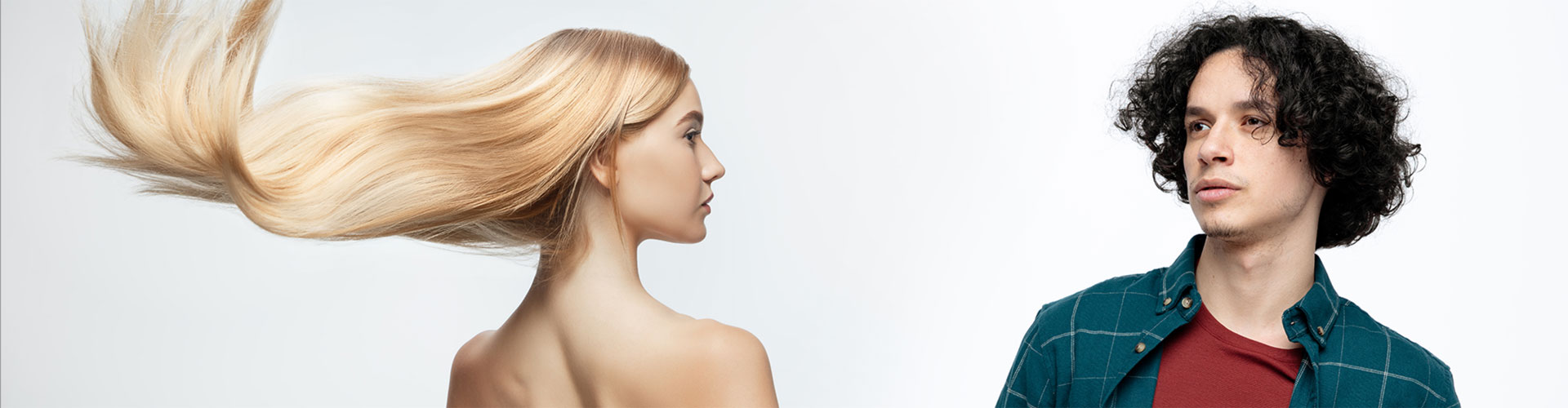
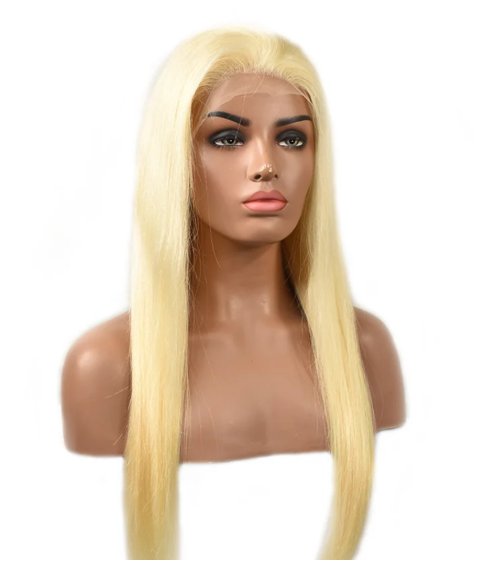
Hair system density is the amount of hair ventilated into a base and the way that hair reads beside the wearer’s own sides and back. A natural result usually comes from matching visible surrounding hair, then adjusting the front, top, crown, base material, length, and texture. The highest density is rarely the safest choice.
A percentage is useful, but it is not a universal unit. Two factories can label similar pieces differently because strand diameter, knot size, hair length, curl, and ventilation spacing change the finished look. Treat the number as an ordering reference. Photos, a density sample, and a zone-by-zone map provide stronger production guidance.
Choose a density that meets the wearer’s side and back hair without creating a heavy ledge on top. Keep the front lighter than the interior when the hairline will show. Factor in age, hair diameter, color contrast, curl, length, and the base’s safe carrying capacity. Confirm the result with daylight photos rather than a percentage alone.
Decision factor | What to inspect | Density effect |
Side and back hair | Fullness at temples and occipital area | Sets the main ceiling |
Exposed hairline | Skin visibility and recession | Usually needs a softer front |
Base material | Fine lace, skin, mono, or combination | Limits practical loading |
Style and length | Flat crop, part, curls, or volume | Changes apparent fullness |
Hair color | Contrast with scalp and gray blend | Dark straight hair can read denser |
Look at the temples, above the ears, and the back in indirect daylight. These areas form the frame around the system. If the top is much fuller, the join becomes visible even when the color match is accurate. A short video is more useful than one still photo because movement exposes the difference in volume.
When comparing a men’s hair system collection, use the wearer’s existing hair as the reference rather than copying the density shown on a styled mannequin.
A single percentage across the whole base can create a flat, uniform block. Mark the hairline, front, top, crown, sides, and back on a simple drawing. State which zones should be lighter, standard, or fuller. A graduated front can soften the transition while the crown keeps enough body to cover a whorl.
· Photograph dry hair from the front, top, both sides, and back.
· Record whether the front is exposed, partly covered, or fully covered.
· Note gray percentage and hair diameter at the sides.
· Send a current haircut reference, not a photo from years earlier.
Age is a useful visual clue, not a formula. Two people of the same age may have very different side density, hairlines, face shape, and style. A mature wearer with thick side hair can carry more top density than a younger wearer with fine, sparse sides. The practical check is balance in daylight.
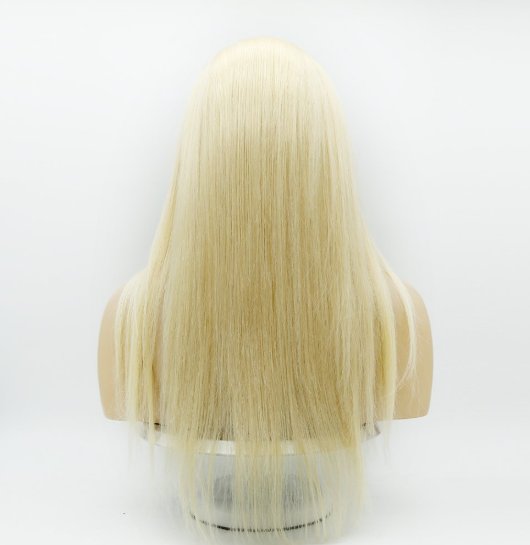
Build a believable front hairline
The first half inch controls the first impression. A dense row of identical hairs can look abrupt. Ask for a softer, irregular transition when the hairline will be visible. Density can rise behind that transition, giving styling support without turning the edge into a dark band.
Fine lace can create a delicate front, but very heavy ventilation may crowd the mesh and make knots more visible. Thin skin can produce a clean surface with looped or injected hair, yet excessive loading may affect movement and wear. Monofilament can carry more structure, though its strength does not mean every order should be full.
Ask the supplier for the safe density range of the exact base construction. Combination systems need separate instructions for each panel. The lace front, mono center, and reinforced perimeter should not be treated as one uniform surface.
Long hair overlaps itself and often looks fuller than the same density at a short length. Curl and wave add visible volume. Fine light hair may allow more density before it appears heavy, while straight dark hair against a light scalp shows every crowded line. These factors explain why copying a percentage from another wearer often fails.
A flat crop, defined part, brush-back style, and lifted quiff expose different areas. A part needs believable scalp visibility. A brush-back style needs a controlled front. A textured style may use moderate interior density to hold shape. Send the styling direction with the density map so the knot pattern supports the final cut.
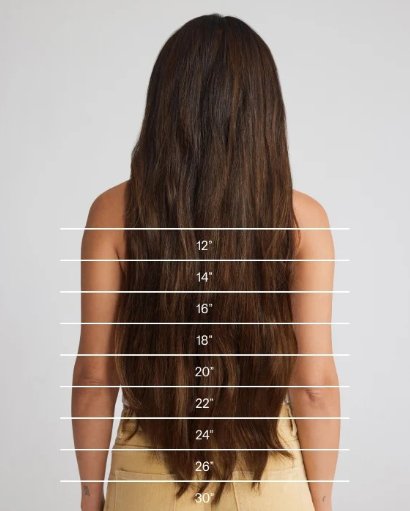
Avoid common density ordering mistakes
· Do not choose extra density only because shedding may occur later. The starting result still needs to look believable.
· Do not thin a finished system aggressively without checking the knot method and base. Random removal can expose mesh or damage loops.
· Do not approve density under one warm factory light. Request neutral indoor and indirect daylight views.
· Do not rely on labels such as light or medium without photos, samples, or written zone instructions.
A close front photo can make almost any system look full, while a high camera angle can exaggerate scalp visibility. Ask for a repeatable set: front at eye level, top directly above, both sides, back, and a slow turn in indirect daylight. Hair should be dry and free from heavy fibers, wet-look gel, or strong root lift. Those products change apparent density and make comparison unreliable.
Include one photo with a narrow part opened by a tail comb and one with the hair resting naturally. The opened part shows spacing and scalp effect. The resting view shows volume and blending. Keep the camera distance and background similar when comparing a sample with production.
Terms such as light-medium or 100 percent are factory references. A physical sample ties that reference to a real base, hair diameter, length, curl, and color. Record the approved sample number, photograph it beside the density map, and keep the underside image. If the next order changes from short straight hair to longer wave, review density again because the visual volume will change.
Inspect the hairline, top, crown, sides, and back separately. Look for dark clusters, thin windows, missed ventilation, or a sudden step at a panel join. Compare the piece with the approved sample under the same lighting. A simple pass or fail note is not enough; list the zone and attach a close photo whenever the result needs correction.
A useful density request includes current daylight photos, base dimensions, hairline position, density by zone, hair diameter, color and gray percentage, curl, length, hairstyle, and whether the front will be exposed. Ask for top, front, side, back, and underside photos before shipment.
For an individual order, review custom men’s hair replacement options and send the density map with the base drawing so the two specifications are checked together.
Qingdao Eminent Hair Products Co., LTD is a Qingdao-based wig and hair system supplier. Company materials describe about 50 factory workers and roughly 500 knotting workers. Its hair manufacturing team works with varied base designs, knotting methods, hair origins, colors, lengths, and custom requirements. Density decisions are most reliable when the buyer supplies zone instructions and approves samples or production photos before a larger order.
Natural hair system density comes from proportion. Match the remaining hair first, soften an exposed front, respect the base construction, and adjust for length, curl, color, and hairstyle. Replace vague labels with a zone map and daylight evidence. That process gives the factory a measurable target and gives the wearer a top that belongs with the hair around it.
These questions cover the density decisions most often made before ordering.
There is no universal percentage. Supplier scales vary. Match the sides and back, then confirm the proposed front and top with samples or daylight photos.
Often yes, especially when the front is exposed. A gradual transition can reduce a dark, abrupt line while leaving useful body behind it.
Often it can, because longer strands overlap and create more visual volume. Curl and wave can add further fullness.
Sometimes, but removal can expose mesh or damage knots and loops. Ordering the right zone density is safer than heavy correction after production.
Send current photos, side and back density, base design, zone map, hairline style, color, gray, length, curl, and the intended haircut.
When the specification is ready, contact the supplier with the photos, density map, and reference sample details.
The quality of the products is the foundation of our existence!Customers'satisfaction is our permanent commitment!

Follow us on social media and find more about our hair procedures and for our latest news, photos and success stories.
TELEPHONE :+86-18765287179
WHATSAPP :+86-18765287179


© 2026 Qingdao Eminent Hair Products Co.,LTD. All Rights Reserved. Powered by HiCheng