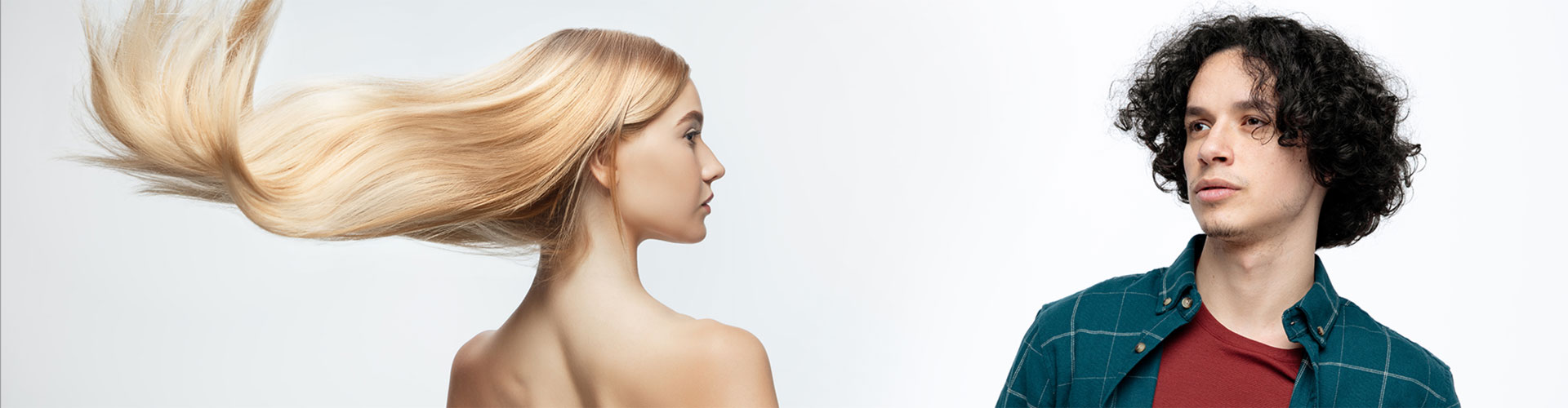
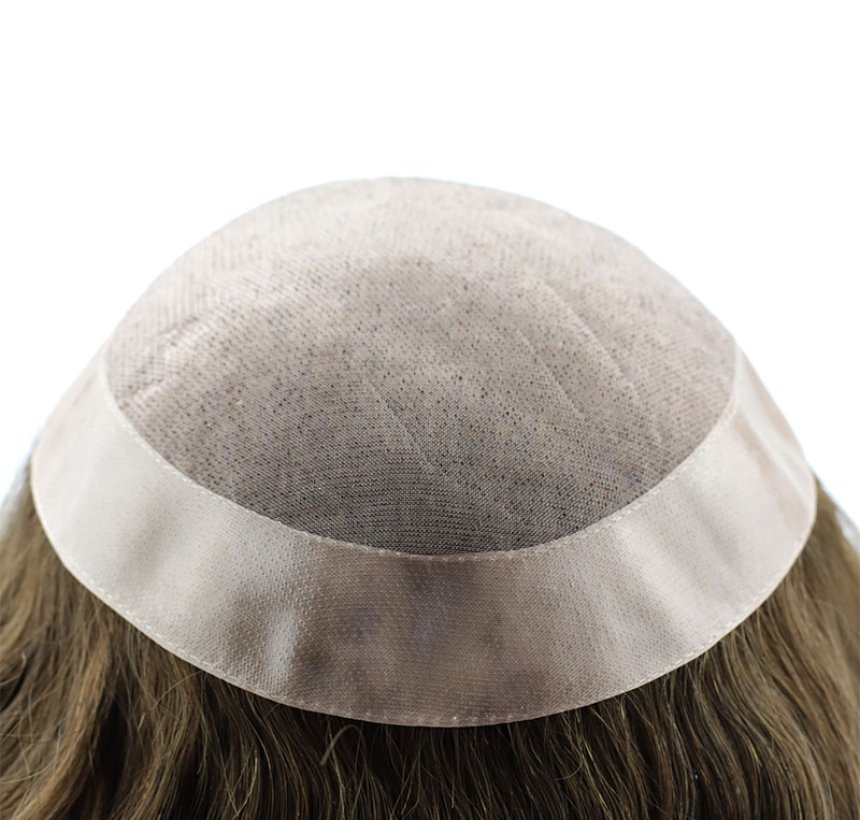
A hair topper for women can use a silk top or a mono base. Seen from the hair side, the two toppers can be difficult to tell apart. The underside gives the game away: silk top carries an extra scalp-toned layer, whereas mono is largely mesh. That construction choice is felt in ordinary use—in the part, in heat around the crown, and at the edge late in the day.
Before choosing “silk or mono,” put three things on paper: the boundary of the thin area, the locations where clips could grip healthy hair, and the parting habit. A fixed part calls for something different from a part that changes every morning. These notes narrow the choice of a hair topper for women before color or curl enters the discussion.
Silk top uses two working layers. Hair is first tied into mesh, then drawn through the upper fabric. The knots stay underneath. From normal viewing distance, the exposed line can read as scalp rather than netting and knots.
Most of the visual benefit sits along the parting line. It cannot rescue an edge that is too thick, hair that is too dense, or a color that misses the wearer's own shade. On a wide base, the added fabric may also hold more warmth.
For somebody who exposes the same part most days, hiding the knots there can justify the extra layer. A wearer who moves the part around is paying for a smaller benefit. Eminent Hair's women's topper overview lists silk with mono, lace, and fishnet—useful options for different fitting problems, not a simple quality ladder.
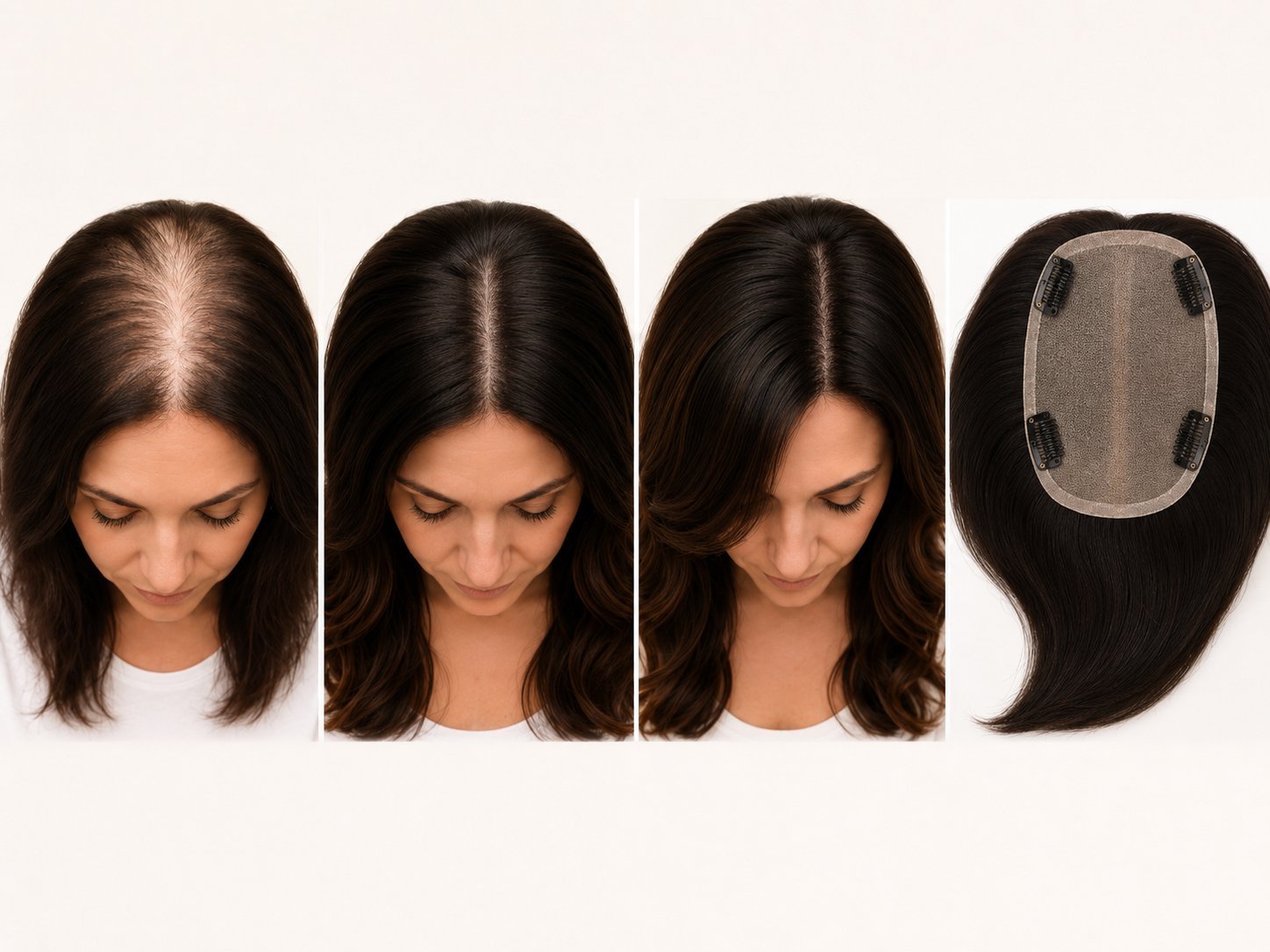
Mono starts with one fine mesh. Hair may be ventilated across much of it, leaving the stylist more room to alter the direction. A side part today and a softer, less defined part tomorrow are both practical. Air also moves through the open net more readily than through a two-layer silk area.
Now look at the drawback. Knots sit closer to view. The contrast is easiest to see with dark hair over a light scalp, and crowding too much hair into a small base makes it worse. Knot size and selective bleaching matter, although neither compensates for excessive density or a base that refuses to sit flat.
The factory-direct mono topper shows why buyers need more than the phrase “mono topper.” Ask for a drawing of the perimeter. Mark the clip positions. Identify every PU or tape section. Two mono pieces with different edges may wear and attach very differently.
Do the comparison on a head, not on a catalog page. In room light, make two different parts, lift the crown, then view it from above. Silk generally looks quieter along the exposed line. Mono gives the fingers more freedom to redirect the hair and may feel less built-up in motion.
The center is only half the test. Feel around the perimeter and turn the head for a side view of the front. A lifting edge is an everyday annoyance, whatever the part looks like from directly above.
Trace the thin area before discussing base material. Then add a margin that reaches stronger hair. A slim base may cover a narrow widening part. Use it over diffuse thinning, however, and its clips can end up sitting exactly where the remaining hair is least able to carry them.
Going larger spreads attachment pressure, though it adds warmth and creates a longer edge to blend. The goal is not the smallest or largest base. It is a base whose edge finishes in usable hair.
The diagrams and examples in Eminent Hair's women's hair topper coverage guide help with the first estimate. Next, try a paper or plastic template on the head. Redraw any edge that cuts through a sparse patch, and shift a proposed clip when the hair beneath it feels fragile. Those changes are cheap before production.
Clips make removal simple, but they still load the hair beneath them. Each one needs a firm anchor and must remain comfortable beyond the first few minutes. Tenderness at the same spot is enough reason to relocate a clip; visible breakage should not be the first signal.
Some bases add PU sections for tape or adhesive. Integration designs use openings through which natural hair is drawn. Either alternative changes cleaning and removal, and integration can add time to an appointment. The wearer should rehearse that routine in advance. A technically suitable attachment is a poor choice if it cannot be managed at home.
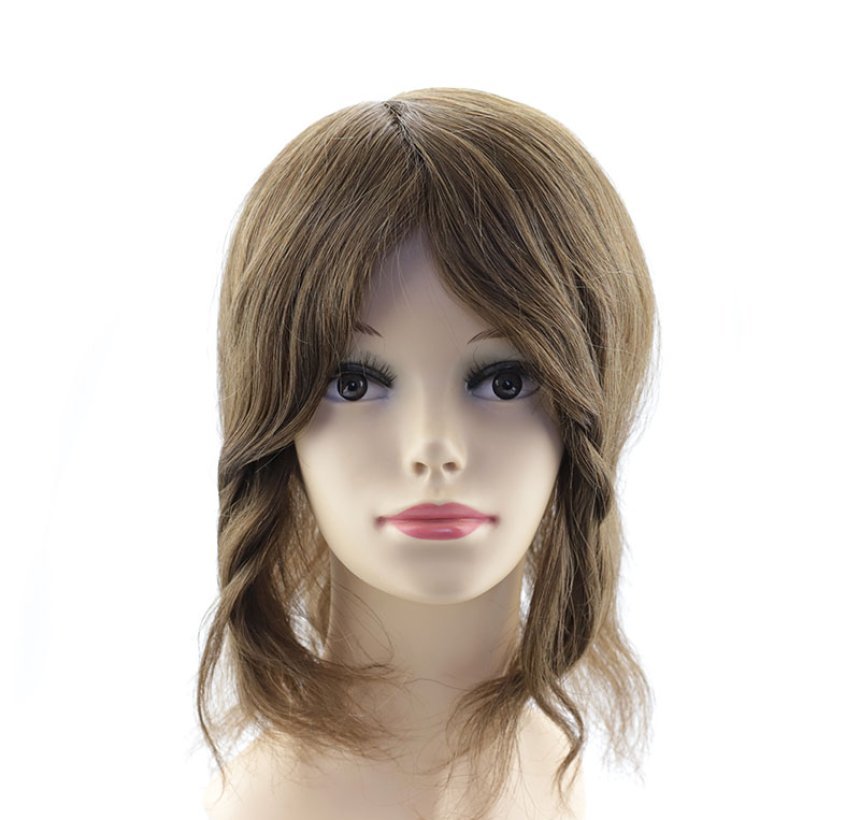
Human hair leaves room for cutting and blending after the topper arrives. The word Remy refers to cuticle alignment; it does not reveal how aggressively the hair was lightened or coated beforehand. Wash a small sample if the order is significant. Tangling, dry ends, color in the rinse water, and a wave that never returns are more informative than the label alone.
For color, compare root, middle, and ends separately. Note gray percentage and any highlight pattern. Check the match by a window and again indoors. Phone cameras alter both warmth and brightness, so a clean hair sample or professional color ring is the safer reference.
Extra density is tempting because it promises coverage. Too much hair, though, can sit like a shelf above fine natural lengths. A softer density near the boundary gives the stylist something workable, as does a little extra cutting length. The most convincing order is often well below the maximum volume offered on a form.
A longer piece can be cut. A different texture is harder to disguise. Confirm curl and processing before ordering, then ask what temperatures and products the hair can tolerate.
Open every clip before the topper leaves the head. Support the base in one hand while washing so the weight of wet hair does not tug at it. Detangle from the ends in short sections. Keep conditioner on the lengths; residue around knots or tape areas creates a different maintenance problem.
Service life changes with frequency of wear, chemical processing, climate, adhesive, heat tools, and handling. A single number without those conditions is not useful. Dry the base before storage.
For any hair topper for women, coverage, attachment, density, color, curl, and the parting requirement should be approved together.
Choose silk top when a fixed, exposed part is the feature that must look most convincing. Start with mono when heat, flexible parting, or a lighter construction matters more. Even then, coverage and attachment can overturn the first choice. Send Eminent Hair a tracing of the thin area plus a clean hair sample, and build the final specification—base, density, color, curl, and attachment—around those references.
A: Silk top often wins at the exposed part because the colored upper layer hides the knots. Elsewhere, the result depends more on density, color, and the perimeter. Fine mono can blend very well when those details are right. Judge the finished piece on the wearer, in more than one light, and include the edge in the decision.
A: Usually. Air passes through mono's open net, while silk top has another layer over the parting zone. Total construction still matters: a large, dense mono piece may feel warmer than a small hybrid. For a hot climate, compare base area and density along with the material name.
A: It can, particularly when the same clip grips weak hair each day or the piece is removed with a clip still closed. Tenderness and repeated snagging are early warnings; broken hairs around one anchor are a later one. Change the attachment position and review the fit. Continued shedding or scalp symptoms warrant professional advice.
A: Trace the area that needs coverage, then draw the clip positions outside it. Every mark should sit over stable hair rather than the sparse zone. Put the template on, check front and side edges in a mirror, and move around with it. If no stock outline meets those conditions, specify the custom shape.
A: Neither material is automatically better. Human hair is easier to cut into the existing style and generally allows more restyling. Synthetic fiber holds its manufactured pattern with less daily work. The practical comparison is color availability, permitted heat, upkeep, climate, and budget; both categories contain strong and weak products.
The quality of the products is the foundation of our existence!Customers'satisfaction is our permanent commitment!

Follow us on social media and find more about our hair procedures and for our latest news, photos and success stories.
TELEPHONE :+86-18765287179
WHATSAPP :+86-18765287179


© 2026 Qingdao Eminent Hair Products Co.,LTD. All Rights Reserved. Powered by HiCheng